
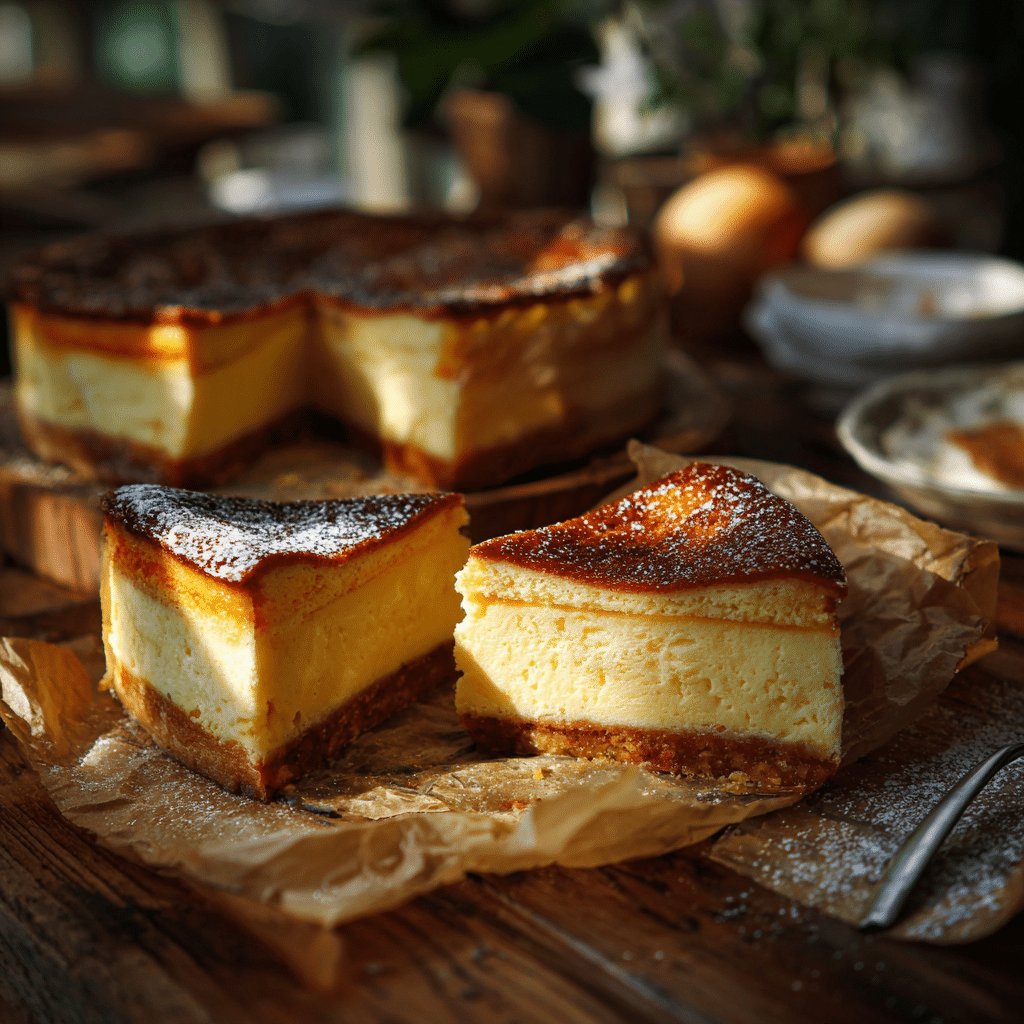
When Lily Taylor first made her magic cake, she wasn’t trying to impress anyone. It was a quiet Sunday, the kind where the kitchen smells like butter and sugar and the only sound is a spoon tapping a glass bowl. The recipe, she remembers, came from her grandmother’s old French notebook a scribbled page titled Gâteau Magique. She had no idea that this unassuming batter would transform itself in the oven into three distinct layers: a dense base, a creamy custard middle, and a light sponge top.
That first bite changed everything. It was unlike any other dessert Lily had baked. The contrast of textures the smooth custard melting into the airy sponge felt like a little culinary illusion. That’s how the magic cake earned its name: one batter, three layers, and pure delight. Over time, Lily adapted it for her readers at Dishfeast, offering both classic vanilla and chocolate versions that captured the same wonder.

Table of Contents
Introduction
Today, this French dessert has become a modern favorite in home kitchens across France. Its charm lies in simplicity: a handful of ingredients, a careful whisk, and a bit of trust in the oven’s mysterious alchemy. Lily likes to remind her readers that baking isn’t just a science it’s also a touch of faith. “The magic,” she says, “happens when you stop watching and start believing.”
The magic cake is proof that the simplest recipes can still surprise us. The thin, almost watery batter might make you doubt yourself, but patience rewards you with a dessert that feels like three in one. Pair it with a drizzle of caramel or a dusting of powdered sugar, and you’ll have something that looks and tastes like a masterpiece.
If you’ve enjoyed comforting classics like her Snickerdoodle Ice Cream Sandwich, you’ll recognize her philosophy: home cooking with heart. The magic cake embodies everything she believes in tradition, love, and a touch of wonder in every slice.
Print
Magic Cake: The Enchanting Dessert That Creates Its Own Layers
- Total Time: 1 hour 15 minutes
- Yield: 8 servings 1x
- Diet: Vegetarian
Description
A classic French Magic Cake that transforms one thin batter into three layers: a fluffy sponge top, creamy custard middle, and firm base. A nostalgic dessert from Lily Taylor’s Dishfeast kitchen.
Ingredients
4 large eggs, separated
¾ cup (150 g) sugar
1 stick (115 g) unsalted butter, melted
¾ cup (95 g) all-purpose flour
2 cups (480 ml) warm milk
1 teaspoon pure vanilla extract
Powdered sugar for dusting (optional)
Instructions
1. Preheat the oven to 150°C (300°F). Line an 8×8 inch (20×20 cm) pan with parchment paper.
2. Whip egg whites until stiff peaks form, then set aside.
3. In another bowl, whisk egg yolks with sugar until pale. Add melted butter and vanilla.
4. Gradually sift in flour, then whisk in warm milk until smooth and thin.
5. Gently fold the whipped egg whites into the batter. Don’t overmix.
6. Pour the batter into the prepared pan and bake for 55 minutes, until the top is golden and the center slightly jiggles.
7. Cool completely, then chill for 2 hours before slicing. Dust with powdered sugar before serving.
Notes
Use room-temperature eggs and milk to ensure the layers form correctly.
Do not overbake—the center should jiggle slightly.
Refrigerate before serving for clean slices and perfect texture.
- Prep Time: 20 minutes
- Cook Time: 55 minutes
- Category: Dessert
- Method: Baking
- Cuisine: French
Nutrition
- Serving Size: 1 slice
- Calories: 265
- Sugar: 18g
- Sodium: 95mg
- Fat: 12g
- Saturated Fat: 7g
- Unsaturated Fat: 4g
- Trans Fat: 0g
- Carbohydrates: 31g
- Fiber: 0g
- Protein: 6g
- Cholesterol: 135mg
The Science and Ingredients Behind the Magic Cake
The Secret Science of the Layers
What makes the magic cake so extraordinary is its natural ability to separate into layers without any tricks. Lily Taylor explains that the process relies on ingredient density and baking temperature. When the thin, custard-like batter goes into the oven, gravity and heat do the rest. The heavier flour and butter settle to the bottom, forming a solid foundation. The middle layer becomes creamy custard, while the whipped egg whites rise to the top, creating a golden, airy sponge.
The key lies in temperature control. Lily recommends baking the magic cake at 150°C (300°F) for about 50 to 60 minutes, ensuring that each layer forms slowly. A hotter oven would ruin the custard’s texture, while a cooler one might leave the center runny. This balance of science and patience mirrors her cooking philosophy shared in How to Make the Crispiest Parmesan Roasted Potatoes Ever: let the oven do its quiet work.
As the cake bakes, your kitchen fills with the aroma of butter and vanilla one of those small, comforting pleasures that make home baking irresistible. When cooled, the three layers reveal themselves like a beautiful surprise, proving once again that simplicity and precision create the most stunning results.
The Essential Ingredients That Make the Magic
The charm of the magic cake comes from just five basic ingredients:
eggs, sugar, butter, flour, and milk. These pantry staples combine to create layers that defy logic.| Ingredient | Role in Magic Cake |
|---|---|
| Eggs | Yolks add richness; whipped whites create the light top layer. |
| Sugar | Provides sweetness and stability for the egg foam. |
| Butter | Adds depth and moisture while helping the batter settle. |
| Flour | Creates the structure for the base and keeps the layers balanced. |
| Milk | Forms the custard as it bakes slowly in the oven’s gentle heat. |
For the perfect magic cake, Lily insists on room-temperature ingredients. Cold eggs or milk will prevent the layers from separating properly. Vanilla extract is the traditional choice, but she encourages experimenting with flavors almond, citrus, or even a hint of rum can create new sensations.
In her creative twist on Avocado Toast: The Ultimate Guide to Classic & Creative Perfection, Lily shows how subtle details elevate a recipe from good to unforgettable. The magic cake follows that same principle balance, texture, and a little confidence in the process.
Step-by-Step Guide to Baking the Perfect Magic Cake
Preparing Your Ingredients and Pan
The beauty of the magic cake lies in its simplicity but precision matters. Lily Taylor always says, “Measure like a scientist, mix like an artist.” Before you start, preheat your oven to 150°C (300°F) and gather your essentials:
- 4 large eggs, separated
- ¾ cup (150 g) sugar
- 1 stick (115 g) unsalted butter, melted
- ¾ cup (95 g) flour
- 2 cups (480 ml) warm milk
- 1 teaspoon pure vanilla extract

For the pan, Lily recommends a 20×20 cm (8×8 inch) square pan or a similar ceramic baking dish. Avoid springform pans, as the batter is too thin and can leak. Line your pan with parchment paper, letting the edges hang over slightly this makes removing the cake much easier.
She also stresses that room-temperature eggs and milk are non-negotiable. Cold ingredients can cause uneven layering. The batter should be thin, almost like crepe batter that’s a good sign. If it looks runny, resist the urge to add more flour; that texture is what makes the magic happen later.
Lily follows a similar principle in her How to Make Crispy Chicken Thighs with Juicy Flavor Every Time: the secret isn’t adding more, but trusting the process. Baking is as much about restraint as it is about creativity.
Mixing and Baking the Batter
- Whip the Egg Whites:
Start by beating the egg whites until stiff peaks form. This creates the air pockets that later become the top sponge layer. Set them aside. - Whisk the Yolks, Sugar, and Butter:
In a separate bowl, beat the egg yolks and sugar together until the mixture becomes light and creamy. Pour in the melted butter, then mix in the vanilla until fully combined. - Add Flour and Milk:
Gradually add the flour, mixing only until it’s just incorporated. Slowly pour in the warm milk while whisking continuously until the mixture is smooth. The batter should be very thin, resembling the texture of melted custard. - Fold in the Egg Whites:
Gently fold the whipped whites into the batter using a spatula. Don’t overmix; a few streaks of egg white are fine. These will rise to form the sponge top. - Bake with Patience:
Pour the batter into the prepared pan and bake for approximately 55 minutes. When it’s done, the center should have a slight jiggle, much like a crème brûlée. Let it cool completely before slicing, as it will continue to set while cooling.
When Lily first shared her baking method on Dishfeast, readers loved her tip of cooling the cake in the fridge for two hours before serving. The layers firm up, and each slice reveals a stunning trio: soft sponge, silky custard, and firm base.
If you want to add a twist, top it with powdered sugar or fresh berries. The contrast between sweetness and tart fruit echoes the harmony Lily achieves in her Red Velvet Thumbprint Cookies bold yet balanced, simple yet satisfying.
Common Mistakes to Avoid
- Overbeating Egg Whites: Too stiff, and they won’t fold smoothly.
- High Oven Temperature: A hot oven will cook the custard too fast, leaving only two layers.
- Cutting Too Early: Letting the cake cool completely is crucial. Cutting too soon breaks the layers.
Serving Suggestions
Serve your magic cake chilled, with a dusting of powdered sugar or a drizzle of caramel. For a cozy twist, try pairing it with a warm drink or a scoop of vanilla ice cream Lily’s favorite way to serve it after dinner with friends.
Her approach echoes the spirit of Viral Cloud Eggs Recipe: Make the Fluffiest Breakfast in Minutes: take something humble, treat it with care, and let it surprise you.
In the next section, we’ll explore the history, flavor variations, and the cultural roots of the Magic Cake, along with Lily’s expert answers to your most common questions.
Origin, Variations & FAQ Section
The French Origins of the Magic Cake
The magic cake or gâteau magique originated in rural France, where home bakers made the most of limited ingredients. Long before it became a social media sensation, this dessert symbolized creativity born from scarcity. French homemakers in the mid-20th century discovered that a single, thin batter could bake into three textures: firm, creamy, and airy.
Lily Taylor grew up hearing this story from her grandmother, who called it “the cake that bakes itself.” It fascinated her even as a child. When Lily recreated it for Dishfeast, she realized that the magic cake captures everything she loves about traditional French desserts: warmth, surprise, and a sense of home.
Flavor Variations Worth Trying
While the classic vanilla magic cake remains a favorite, Lily often experiments with subtle variations to keep things exciting:
- Chocolate Magic Cake: Add ¼ cup of unsweetened cocoa powder for a rich, indulgent twist.
- Lemon Magic Cake: Add zest and a spoonful of lemon juice to balance the sweetness.
- Coffee Magic Cake: Replace part of the milk with strong espresso for a bold flavor.
The base technique stays the same, but these small tweaks create different moods light and floral, dark and decadent, or aromatic and sophisticated. As Lily often reminds readers, “Once you know the rules, you can play with flavor.”
Conclusion
The magic cake isn’t just a dessert it’s a story of transformation. From one simple batter emerges a trio of textures that surprise and delight with every bite. Lily Taylor’s approach, rooted in family tradition and culinary curiosity, reminds us that great recipes don’t need extravagance they need care, patience, and a bit of wonder.
Whether you serve it chilled on a summer afternoon or warm beside a fire in winter, this cake brings comfort and awe to any table. As Lily says, “The best kind of magic happens in the kitchen.”
If this recipe sparked your curiosity, you might also love exploring Hot Halloumi or Avocado Toast: The Ultimate Guide to Classic & Creative Perfection two other Dishfeast favorites that turn simplicity into pure satisfaction.
FAQ Section
What kind of pan should be used for a magic cake?
Use a 20×20 cm (8×8 inch) square or rectangular baking pan made of glass or ceramic. Avoid springform or loose-bottom pans because the thin batter can leak. Lining the pan with parchment paper helps with easy removal and keeps the layers intact.
What are the five basic ingredients of a cake?
The magic cake uses the essential building blocks of baking: eggs, sugar, butter, flour, and milk. These combine to form the three signature layers. Whipping the egg whites and using warm milk are key to achieving the correct texture.
What is the best flavor extract for a magic cake?
Classic pure vanilla extract brings out the rich custard aroma that defines the dessert. For variety, try almond or orange extract for a floral note, or add coffee essence for depth. Lily often chooses flavors based on the season vanilla for winter, citrus for summer.
What is the origin of the magic cake?
The magic cake originated in France, where it became popular as gâteau magique. The concept likely spread through European households before being rediscovered by modern food bloggers. It reflects the ingenuity of home cooks who turned a few ingredients into something extraordinary.